How Do Sceye’s Stratospheric Airships Check Greenhouse Gases
1. The Monitoring Gap Could Be Bigger Than Most People Realise
global greenhouse gas emissions can be monitored with a mix of ground stations, occasionally plane flights, and satellites that operate hundreds of kilometers above the earth’s surface. Each has their own set of limitations. Ground stations are sporadic and geographically oriented toward wealthy nations. The aircraft campaign is expensive brief-duration, limited in duration, and small in coverage. Satellites can reach the world, but are not able to attain the spatial accuracy required to pinpoint the exact emissions sources — like a leaking pipeline, a landfill venting methane industrial unit that is not reporting its output. This results in the monitoring system has significant issues at precisely the level where accountability and intervention is crucial. Stratospheric platforms are increasingly considered as the unfinished middle layer.
2. Altitude is the best way to keep track of your surroundings Satellites Aren’t Able to Replicate
There’s an argument based on geometry how 20 kilometres beats the 500 kilometers for monitoring emissions. A sensor operating from stratospheric altitude is able to see a ground footprint of up to a hundred kilometres whilst remaining close enough detect emission sources at a high level of resolution. These include individual facilities roads, roads, agricultural zones, and so on. Satellites observing the same region from the low earth orbit can cover it better but at a lower granularity and the times to revisit mean that a methane plume, which appears and dissolves within hours can’t ever be observed. A platform that remains over a particular area for days or weeks in a row transforms periodic snapshots into something closer to continuous surveillance.
3. Methane is the main target for a valid reason
Carbon dioxide draws the bulk of the media attention, but methane is the greenhouse gas for which future monitoring improvements could make the biggest difference. Methane’s power is considerably greater than CO2 over a period of 20 years and a significant portion of the methane emissions that are anthropogenic come from point sources — oil and gas infrastructure or waste facilities, agricultural operations that are both detectable as well as fixable when identified. Real-time monitoring of methane from a continuous stratospheric platform mean regulators, operators, and government officials can spot leaks as they happen rather than discovering them years later when they conduct annual inventory reconciliations which typically rely on estimates, rather than actual measurements.
4. The design of Sceye’s airship is perfectly suited to the Monitoring Mission
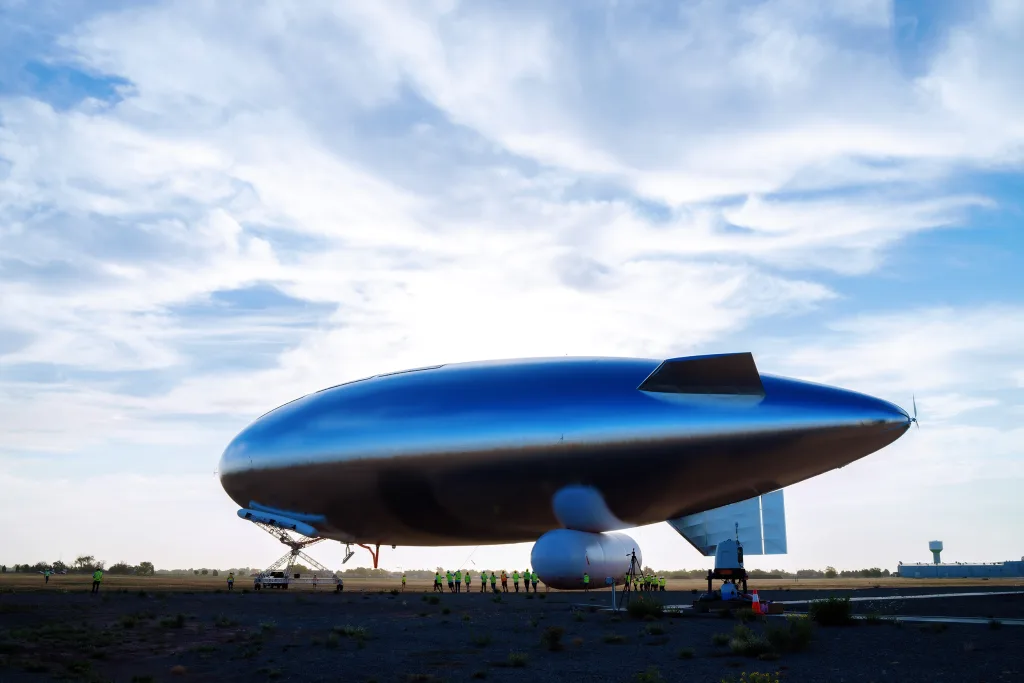
The elements that make up an excellent telecommunications platform as well as a good environmental monitoring platform overlap more than you imagine. Both require endurance for a long time stability, stable positioning, and important payload capacities. Sceye’s lighter-than air airship solution addresses all three. Because buoyancy performs the essential purpose of staying above the ground its energy budget doesn’t go to generating lift It’s used for propulsion, station-keeping and powering whatever sensors suits the mission. When it comes to monitoring greenhouse gases, specifically this includes carrying instruments for spectrometers, imaging systems and data processing hardware without the extreme weight constraints which limit fixed-wing HAPS designs.
5. Station Keepers Are Not Negotiable to Important Environmental Data
A monitoring system that drifts can produce unintelligible data. The ability to determine exactly where a sensor was at the time of recording a reading is vital to attribute that reading to a source. Sceye’s emphasis on station keeping – holding in a predetermined position above a targeted area using active propulsion — isn’t just an arbitrary performance measure. It’s part of what makes the data legitimately defended. Stratospheric earth observations are only essential for regulatory or legal purposes when the positional record is secure enough to stand to scrutiny. The balloon platforms that drift, however advanced their sensors may be, are unable to provide that.
6. The same platform is able to monitor Oil Pollution and Wildfire Risk During the Same Time
One of many compelling aspects of the multipayload approach is the way that different environmental monitoring tasks complement each other within the same vehicle. Airships that operate over coastal or offshore regions can be equipped with sensors that are calibrated for detection of oil pollution, as well as those tracking methane or CO2. Over land, the exact platform architecture provides wildfire detection technology – identifying smoke plumes, heat signatures and vegetation stress indicators that precede ignition events. Sceye’s design approach to mission development takes these into consideration not as separate applications that require separate aircrafts, but as a parallel use case for infrastructure already placed and operating.
7. The ability to detect Climate Disasters in Real-Time Changes the Response Equation
There’s a significant difference between knowing that a forest fire began within six hours and knowing it started a mere twenty minutes ago. The same applies to industrial accidents releasing dangerous gases, flooding incidents inflicting damage to infrastructure, or abrupt methane releases from permafrost. The ability of detecting climate catastrophes in real time using a constant stratospheric database gives emergency planners along with government agencies and industrial operators the opportunity to intervene which doesn’t exist if monitoring relies on satellite revisit cycles or ground-based reports. The value of that window increases when you realize that the initial phases in most environmental emergencies an area where intervention is the most efficient.
8. Its Energy Architecture Makes Long Endurance Monitoring Viable
Environmental monitoring missions only offer their true value if a station is left on for long enough for the creation of an important data record. A week’s worth of methane readings in an oil field will tell you something. Continuous data for months will show an actionable thing. It is necessary to overcome the problem of night-time energy — the platform must retain enough power through periods of daylight to support any system during the evening without affecting their position or sensor operation. The advancements in lithium-sulfur battery chemistry and energy density levels of 425 Wh/kg and increasing solar cell efficiency create a closed power loop practicable. Without both, endurance remains a aspiration rather than an objective.
9. Mikkel Vestergaard’s History Explains the importance of the environment
It is important to understand why a corporation that operates in the stratospheric space sector puts a apparent emphasis on greenhouse-gas monitoring and disaster prevention rather than solely focusing on connectivity revenue. Mikkel Vestergaard’s long-standing experience of applying technology to huge-scale environmental and humanitarian issues gives Sceye an initial focus that defines the mission that Sceye prioritizes and how it conveys its platform’s function. The environmental monitoring capabilities aren’t simply a payload grafted on to make a vehicle for telecoms appear more socially conscious. They demonstrate a strong belief of the need for stratospheric infrastructure to be conducting climate work, and it is possible for the same platform to be used for both, without compromising either.
10. Data Pipeline Data Pipeline Is as Important as the Sensor
In the process of collecting greenhouse gas readings from the stratosphere’s air is only half the issue. getting the data to individuals who require it in a format that they can use, in something as close to real time is the other half. A stratospheric system with onboard processing capability as well as direct downlink to ground stations can narrow the time between decision and detection significantly as compared to systems which batch data to be later analyzed. In the case of natural resource management applications that monitor regulatory compliance, or emergencies, the speed of the data usually matters to the extent of its accuracy. Incorporating that data pipeline into the platform’s infrastructure from the beginning, instead of using it as a last resort is one of the things that makes a difference between serious stratospheric satellite earth observation from the flimsier sensor campaigns. Take a look at the recommended what are the haps for website recommendations including Sceye HAPS, Lighter-than-air systems, what haps, softbank group satellite communication investments, sceye haps softbank partnership details, Sceye HAPS, Solar-powered HAPS, sceye haps softbank partnership, Lighter-than-air systems, Sceye Wireless connectivity and more.

Mikkel Vestergaard’s Vision Behind Sceye’s Aerospace Mission
1. The Founding Vision of a company is often overlooked as a Factor in Aerospace Company Outcomes
The aerospace industry has two broad types of company. The first is built around technological advancements that seek applications — a capability in engineering in search of a marketplace. It starts with a matter of concern and proceeds toward the technology for addressing the issue. This distinction may seem abstract until you look at what each type of company does along with the kind of partnerships it makes, and how it makes choices when resources are limited. Sceye is clearly a part of the second group, and knowing that orientation is important to understand why the company chose the specific engineering decisions it has based on -lightweight design, multi-mission payloads that emphasize endurance, and a founding site within New Mexico rather than the coastal aerospace clusters that attracted the majority of space-related venture capitalists.
2. The Issue Vestergaard Started With Was Bigger than Connectivity
The majority of HAPS companies have their core narrative in telecommunications — to bridge the gap in connectivity inaccessible billions, the financial benefits for reaching remote communities with existing infrastructures for communication. They are real problems, but they are commercial problems that require solutions. Mikkel Vestergaard’s starting point was different. His background in applying high-tech technology to human and environmental challenges produced a founding orientation at Sceye which views connectivity as one output of stratospheric infrastructure rather than as its primary function. Monitoring greenhouse gas levels for disaster detection, ground observation and oil pollution monitoring and management of natural resources were part of the mission’s architecture from the beginning. Not additional features later added to give a telecoms platform a look more socially-conscious.
3. The Multi-Mission System is a Direct Expression of That Vision
When you realize that initial question was about how the stratospheric technology could tackle the major monitoring and connectivity challenges simultaneously in a single platform, multi-payload ceases to appear as a clever commercial concept and begins to look like the right answer to that question. The platform that houses telecommunications hardware alongside real-time methane monitoring sensors as well as wildfire detection technology isn’t trying become everything to all It’s expressing an understanding that the issues to be addressed from the stratosphere are interconnected and a vehicle that is that is able to address multiple of them simultaneously is more compatible with the purpose than a device made to work with a single revenue stream.
4. New Mexico Was a Deliberate Selection, Not an Unintentional One
Sceye’s position located in New Mexico reflects practical engineering specifications — airspace access, atmospheric testing conditions, altitude capabilities — however, it also says something about the company’s character. The established aerospace centers of California and Texas draw companies whose main market is investors and defence contractors, and the media industry that surrounds them. New Mexico offers something different by providing the environment to complete the task of designing and testing stratospheric lighter-than air systems without the constraints of being close to the people who finance and write about aerospace. As one of the aerospace companies within New Mexico, Sceye has established a development program based towards engineering validation instead of public narrative, a option that reflects a Founder who is who is more concerned about whether the platform actually performs and not in the possibility of stunning announcement cycles.
5. It is a design priority to ensure that endurance Is an indication of a longer-term mission focus
Short-endurance HAPS platforms are fascinating demonstrations. Long-endurance platforms are infrastructure. The focus on Sceye duration — creating platforms that are able to keep station for months, weeks, or even years rather than days — has been a result of a founder’s realization that the issues worth addressing at the top of the ecliptic don’t fix by themselves in between flight missions. Greenhouse gas monitoring, which runs for about a week then goes dark, produces a document with no scientific or regulatory use. It is a requirement for an instrument that is moved and restarted after every deployment isn’t a permanent early warning layer that emergency managers require. The endurance specification is an expression of what the purpose of the mission is instead of a metric for performance which is used solely for its own benefit.
6. Humanitarian Lens Shapes Partnerships Humanitarian Lens Shapes Which Partnerships get Prioritised
Every possible partnership is worthwhile depending on the criteria an organization uses to assess potential partners can tell you something regarding its interests. Sceye’s agreement with SoftBank on Japan’s HAPS network — which is aimed at the pre-commercialization of services by 2026that is notable not only for its commercial scale, but because of its connection to an entire nation that really needs the benefits of stratospheric networks. Japan’s seismic vulnerability, the complex geography, and national focus on environmental management make it a location in which the platform’s multi-mission capabilities serve the real need rather than generating revenue in a market which has plenty of alternatives. The connection between commercial partnership with mission and partnership is not by chance.
7. An investment into Future Technologies Requires Conviction About the issue
Sceye operates in a learning environment where the technologies it depends on — lithium-sulfur batteries at 425 Wh/kg energy density high-efficiency solar cells for stratospheric planes, advanced beamforming to make stratospheric radio antennas — are all at the edge of what’s currently achievable. To develop a business strategy around technologies which are progressing but not yet fully developed requires a founder with an adequate understanding of the importance of the issue to justify the risk of a timeline. Vestergaard’s belief, that stratospheric connectivity will eventually become a permanent component of global monitoring and connectivity architecture is what drives investment in technologies to come that aren’t likely to develop to their full potential until the platform they create is flying commercially.
8. The Environmental Monitoring Mission Has Become More Important Since its Inception
One of the advantages of creating a company around a real problem, not being a technological trend of the moment is that the problem will become increasingly rather than less crucial over time. When Sceye was established, the case for persistent global monitoring of greenhouse gas levels, wildfire detection, and climate disaster surveillance was compelling in principle. In the years since rapid growth in wildfire seasons growing scrutiny of methane emissions within international climate frameworks and the apparent inadequacy of current monitoring infrastructure have all bolstered the case to be made. The founding vision hasn’t needed change to remain current- the world has moved toward it.
9. Careers at Sceye Represent Sceye’s Breadth of the Mission
The array of disciplines needed to create and operate stratospheric networks for multi-mission needs is much greater than the majority of aerospace-related programmes. Sceye careers span atmospheric science, materials engineering energy systems, telecommunications developing software for remote-sensing and regulatory affairs – and a broad range of disciplines that represent how broad the scope of what the platform is designed to do. Companies based on a single-use technology typically hire only in the field that this technology’s technology is. Businesses based around a challenge that requires multiple converging technology for solving hiring issues across the boundaries of those disciplines. The profile of talent that Sceye draws and creates is a reflection the founding vision’s scope.
10. The Vision is Successful Because it’s Specific about the issue But not the Solution
The most reliable founding concepts in technology companies are precise about the problems they’re solving and adaptable to the tools used. The frame of reference — the persistent stratospheric monitoring infrastructure, connectivity, environmental observation is a precise enough concept that it can generate clear engineering demands and clear partner criteria but it is also flexible enough to adapt to the changing requirements of technologies that support it. As the battery’s chemistry improves when solar cell efficiency rises, as HIBS standards improve, and as the regulatory framework that governs stratospheric operations is created, Sceye’s goal remains the same as its method of executing that mission can use the most effective technology available at any stage. The structure — fixed on the issue, but able to adapt on the solution — is the reason why the aerospace mission has coherence across the entire development timeline measured in years rather than production cycles. Follow the most popular Real-time methane monitoring for blog advice including sceye haps softbank partnership details, japan nation-wide network of softbank corp, what are high-altitude platform stations, sceye careers, space- high altitude balloon stratospheric balloon haps, high-altitude platform stations definition and characteristics, what does haps, softbank sceye partnership haps, Real-time methane monitoring, Stratospheric broadband and more.